
In the previous decade, the government, with Praful Patel as the civil aviation minister, saw the introduction of an irrational 5/20 policy.

Tatas-owned Air India plans to acquire no-frills carrier AirAsia India and has sought approval from the Competition Commission for the proposed deal. AirAsia India is majority-owned by Tata Sons Private Ltd with a shareholding of 83.67 per cent and the remaining stake is with AirAsia Investment Ltd (AAIL), which is part of Malaysia's AirAsia Group. Full service carrier Air India and its low-cost subsidiary Air India Express were acquired by Talace Private Limited, a wholly-owned subsidiary of Tata Sons Private Ltd, last year. Besides, Tatas operate full service airline Vistara in a joint venture with Singapore Airlines.

Budget carrier Go Airlines, which has rebranded itself as 'Go First', has filed preliminary papers for an initial share sale worth Rs 3,600 crore.

Throughout its 155 minutes, every scene is doused in blaring background music and melodrama. Disappointment alone won't do, it must feel like a full blown catastrophe, observes Sukanya Verma.

The phenomenon of fog is largely Delhi-centric. 'Airlines may think that we only have conditions of extreme fog on a few days every year, and spending a pilot's time and the airline's money on training can add up to its expenses.' 'So, they may prefer holding it for a few days.'
Aircraft lease rentals are fixed costs and account for around 15 per cent of an airline's expense and since these are paid in dollars are also subject to currency fluctuations.

If that happens, Jet Airways will be the first bankrupt airline which will be revived under the Insolvency process.

International airlines are offering affected passengers an option of refund, vouchers, discounts on future bookings, and the opportunity to hold tickets for up to two years following travel bans.

'The first and most basic responsibility of any government is to protect its people from external threats and internal harm.' 'Budget 2025-2026 has to focus on meeting this responsibility,' asserts R Jagannathan.

Unprecedented bribery charges, farewells, separation, failed union, monumental mergers and record-breaking IPOs, along with a healthy dose of online happenings in the form of spat and lessons in customer care, corporate India saw it all in 2024.
Air India, IndiGo, and SpiceJet have suspended flights to China and Hong Kong.
Chief executive officers of airlines have asked the government to bear 50 per cent of three months' salaries of employees.

Airlines like IndiGo and Jet Airways have been quick to take the cue to keep their fuel costs under check.

Travelling from South India to Kashmir in December was magical for Ganesh Nadar as he feasted his eyes on the beauty of the snow-capped Himalayas.

President Donald Trump is expected to sign a series of executive orders fulfilling campaign promises, including declaring an emergency at the southern border, addressing a national energy crisis, and defining sex-related policies. The orders aim to address immigration, national security, and energy independence, with a focus on reversing policies implemented by the previous administration.
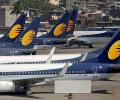
Sources said the process has taken time because of a delay in leasing of aircraft. As per the original plan the aircraft were to be leased through GIFT City, Gujarat, but this is proving costlier than doing it offshore.
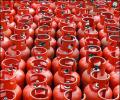
The price of non-subsidised cooking gas (LPG) was on cut by Rs 21 per cylinder and that of jet fuel (ATF) by a steep 3 per cent on the back of falling international oil rates.
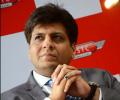
The pilot-turned-airline owner and his partner Biraja Jena plan to launch FlyBig, which has secured 16 routes under the fourth phase of UDAN, the government's regional connectivity programme.
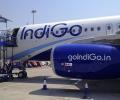
The price of aviation turbine fuel has increased by 50 per cent since January and the situation has adversely impacted IndiGo, its CEO Ronojoy Dutta said on Wednesday. He said the government should bring aviation turbine fuel (ATF) under the Goods and Services Tax (GST) and make flying affordable for consumers and viable for airlines. IndiGo is India's largest airline and with around 55 per cent share in the domestic passenger market.
Pressured by low-cost carriers, the Federation of Indian Airlines has called off its decision to suspend domestic operations on August 18, two days after it was announced.
Air India Express and AirAsia India have moved to a unified reservation system, whereby passengers can make bookings for both airlines through an integrated website. The move is part of the ongoing process of merging AirAsia India with Air India Express. The combined entity will focus on leisure-oriented and price-sensitive markets.
With better utilisation of slots, foreign flying rights, and greater international connections, the operator of India's largest airport feels a privatised Air India will bring commercial benefit to Delhi airport and help it revive quicker from the pandemic shock. Delhi is the largest hub for Air India, with most of its long-haul flights to the US and Europe being operated from here. The airport plans to give its most modern terminal 3 (T3) exclusively to the Tata Group.
Wadia group-owned Go First will temporarily suspend flights on May 3 and 4 amid severe fund crunch, the airline's chief Kaushik Khona said on Tuesday.

Aviation turbine fuel prices increased by 34 per cent whereas fares - on an average across the country - shot up by more than 65 per cent. Since fuel accounts for about 45 per cent of the total costs, the actual impact on airlines, in terms of increase in the cost of operation, would have been around 15 per cent. Airlines also cut capacity by 20 per cent during the period.

Asian and Middle Eastern airlines -- but no Indian names -- dominated the Top 10 slots at the World Airline Awards.
Experts expect a net loss of Rs 26.7 billion for IndiGo and Rs 10.1 billion for SpiceJet in Q1FY21 driven by low traffic volume, low fleet utilisation and poor coverage of fixed costs.

Many argue that the airline could achieve its full potential if Nusli Wadia were to run it the way he does Britannia.

The national carrier, which is already struggling with its fuel payments, spends Rs 6,000-7,000 crore annually on fuel. A 10 per cent hike in crude price would mean over Rs 50-58 crore of extra costs for the airline.

Aviation watchdog DGCA will conduct a special audit of grounded airline Go First's facilities in the national capital and Mumbai from July 4 to 6 before approving the revival plan for resumption of flights, according to a senior official. Cash-strapped Go First stopped flying on May 3 and is undergoing a voluntary insolvency resolution process. Meanwhile, a senior executive at the airline expressed hope of resuming ticket sales -- which was paused by DGCA following the grounding of the carrier -- from July 7 or July 8 and subsequent relaunch of the operations from middle of next month.

At the heart of the strategy is the basic fundamental of keeping costs for long-haul flights low.

While global majors like JetBlue, RyanAir, Southwest sell almost 90 per cent of their tickets through their own websites or apps, airlines in India have a minuscule share of around 25 per cent through direct channel booking.
Jet Air shares rally on expectations that continuing troubles at rival SpiceJet will help it gain market share.

Jet fuel (ATF) price on Wednesday was hiked by 4 per cent in line with firming international oil prices but petrol and diesel rates remained on freeze for a record 10th month in running. Aviation turbine fuel (ATF) price was increased by Rs 4,218 per kilolitre, or 3.9 per cent, to Rs 1,12,356.77 per kl in the national capital, according to a price notification of state-owned fuel retailers. The increase follows three rounds of reduction since November.
Budget carriers say no to full cost airlines' proposal to up rates.
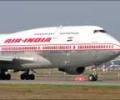
As per 2009 estimates, two major expenditure verticals were fuel cost, with 34.2 per cent, and staff cost, with 16.2 per cent.

In India, domestic airlines have not secured any relief from the government and are reporting 50-55 per cent loads as domestic air travel resumed on May 25 after two-month suspension.
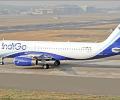
The carriers are scoffing at making the life of their competitors 'easier.
According to the latest figures released by the DGCA, IndiGo, with 27 per cent market share in July this year, has edged past Jet, which managed 26.6 per cent share.
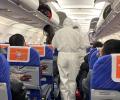
Vistara started allowing passengers to book an extra seat from Tuesday. IndiGo and SpiceJet, too, are in the final stages of designing such a product to be sold as an add-on.
